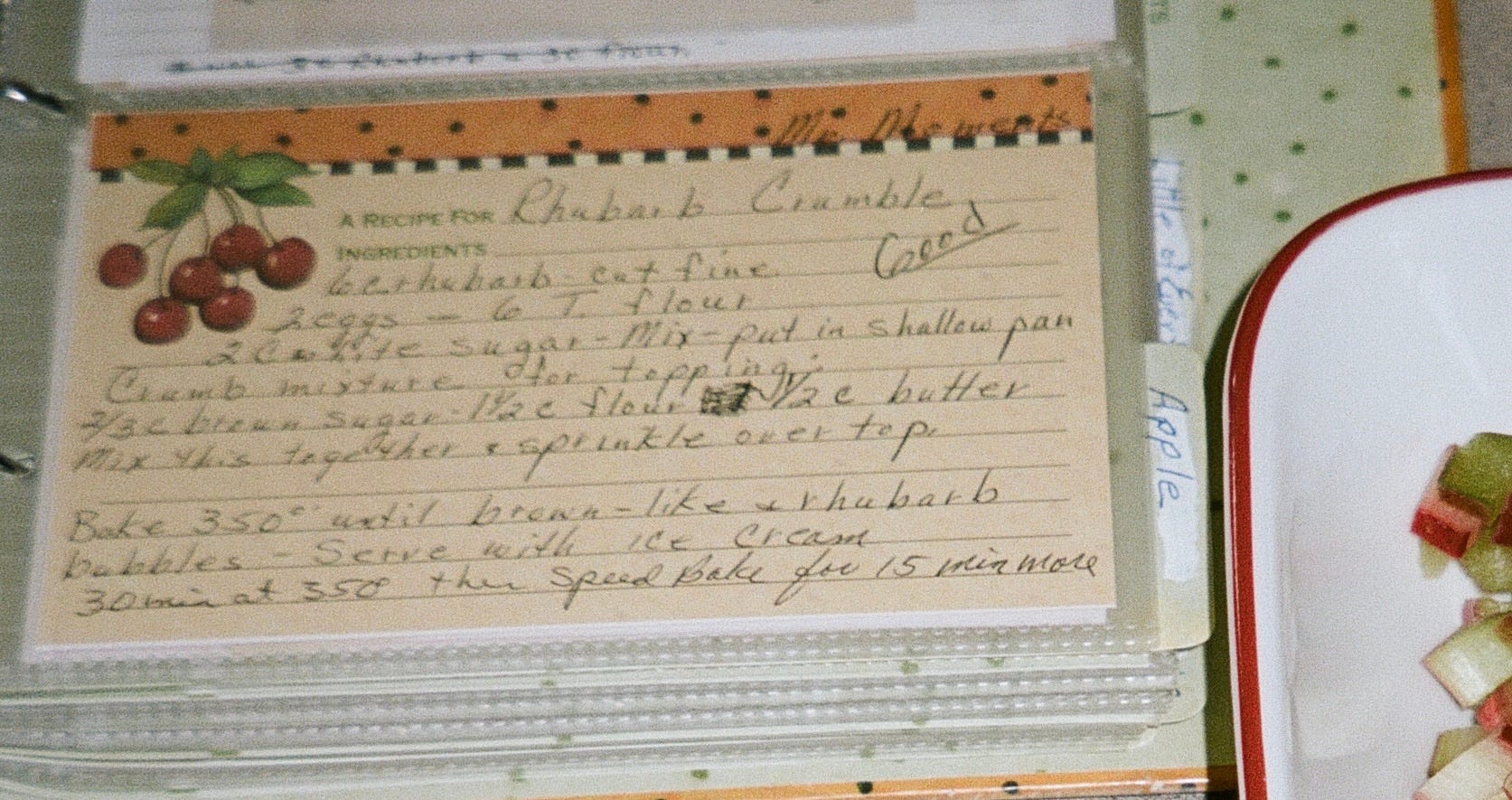
G͟o͟o͟d͟

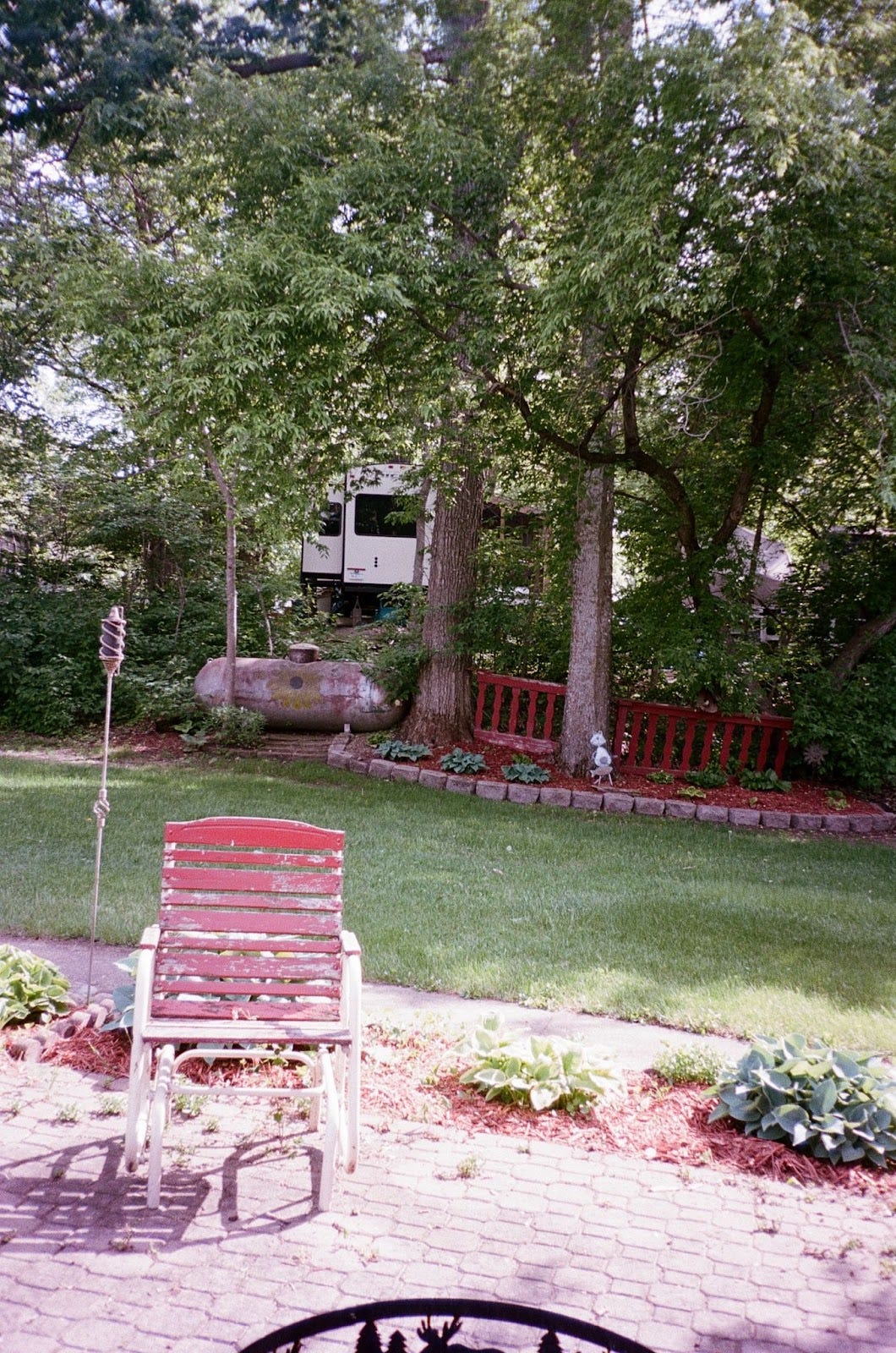
In the days of our youth we played baseball in Nana’s yard until the mosquitos got us. Our little bodies dragged a diamond worth of bases out of the garage and declared the far side of the shed a home run.
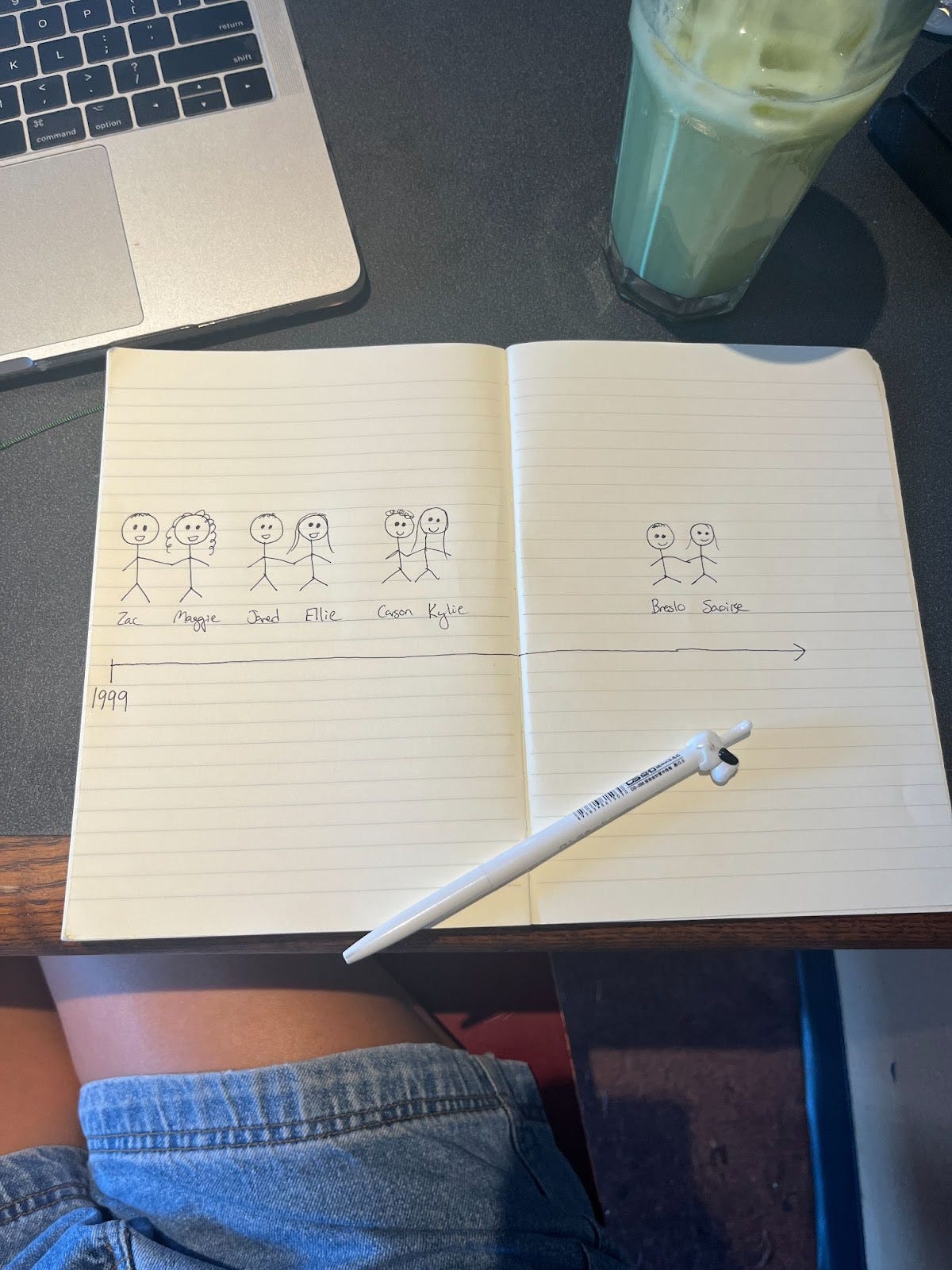
Back then, there were six of us. Our uncle who taught us to play ball would soon marry and add two to our crew. But until then, we were three pairs of first cousins: each pair equal in age and opposite in sex.
(i know, i am arteest.)
We were young and already displaying the stubbornness and self-righteousness our parents were famous for. So, these games were serious affairs.
My sister and I cursed ourselves for wearing flip flops. We kicked off the hindering shoes before our at bats and ran the bases barefoot, sharp sticks be damned.
We whooped and hollered for our teammates. We called our home runs like Babe Ruth.
When our wide eyes followed red stitches through the sky into Nana’s poison ivy-ridden woods, we jeered at the batter. As their pride rolled through the undergrowth, down the hill, and into the lake at its base, we shook our heads. It was a great embarrassment to commit such a faux pas. Another ball lost to us forever, we pointed the culprit towards the bucket of dusty spares in Nana’s garage.
We let the little ones hit off the tee until they insisted they could hit a pitch off Zac like the rest of us. They struck out and cried, and we exchanged sighs.
We argued over the fairness of the teams. We yelled in indignation over foul balls. We stomped our feet and hit plastic bats against the ground to emphasize our points. We tossed gloves in frustration. We threw bats in anger. Some of us threw down in the grass. Zac and Jared made good use of their wrestling training while Ellie and I slapped mosquitos off our ankles.
Someone usually stomped off at one point or another. Such cases necessitated Nana’s idea of conflict resolution: a bomb pop break.
We weren’t angels. Even Nana knew it. We weren’t always nice. But, our feuds only lasted innings. It was some of the most fun I’ve ever had.
At Nana’s house, we went all out. There was something so beautiful about the effort of it. Something messy and lovely in the exertion of trying so hard.
Nana’s house was a place to give a fuck. Actually, more than that: it was a place to give a fuck without fear of it coming back to bite you later. Because we all knew that no one was keeping score in any lasting way. Nana didn’t have favorites, and we didn’t keep score of each other’s transgressions: only how often we made it to home plate.
Nana’s house was a place to be an asshole for a bit and know with confidence that you would remain beloved anyway. To push and claw, to stomp your feet. To brawl and tattle and scream and know that it said nothing about you other than that you were a child. Nana’s house was a place to feel without censoring it– a freedom uniquely granted to children in a safe space.
When the ball became invisible in the waning light and our little bodies were riddled with itchy welts, Nana started a fire in the pit in the yard. Hands were ironically shook, winners and losers trading gloating and begrudging “good game”s. Gloves were tossed next to each other in Nana’s garage until next time. The conflict was forgotten. At the end of the day, all of us cousins threw right and batted left because our Uncle Jason taught us all how to play. In other words, our histories were already inextricable from each other. We wanted our futures to be, too.
We urged the smallest of us to be cautious around the fire. Nana humored me through my marshmallow-aversion phase and let me eat Hersheys by the king sized bar while the others made s’mores. We acted out the Sandlot scene– you know the one– from memory. Twelve knobby, grass-stained knees ringed Nana’s fire pit.
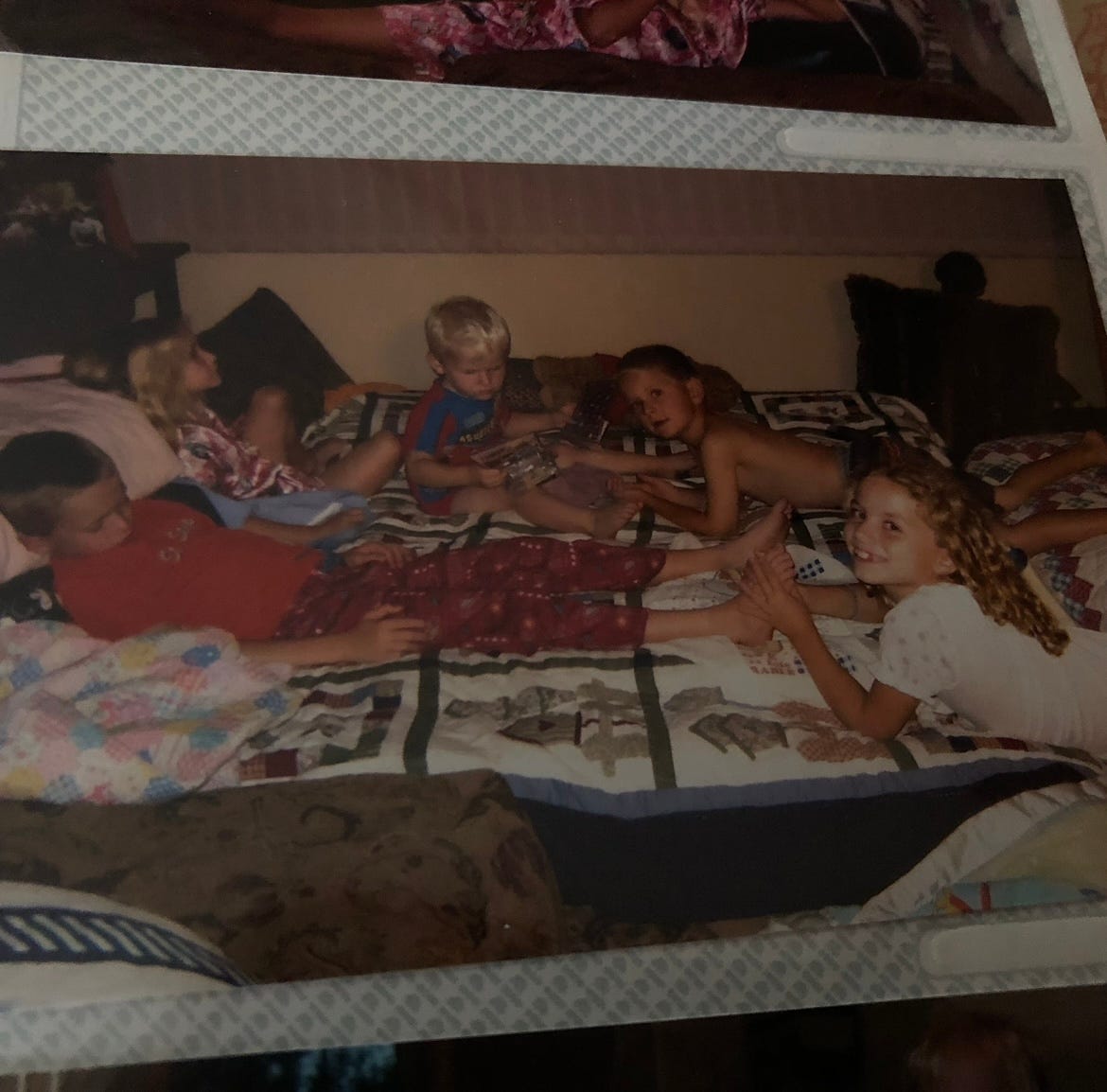
I can’t stress enough how much we were our own little world, the six of us. We were our own little subculture, and we could make, enforce, and remake the rules of our tiny world as we saw fit. It was a very powerful feeling, at our big ages. This sense of agency. We had our own hierarchy, our own traditions, our own jokes.The pecking order was a function of birth order and the order during which we fell asleep at the cousin sleepovers. But the most important rule was, of course, that we wouldn’t end up like our parents.
Our extended family had been rife with feuds since before any of us were born. And yet, during our entire upbringing, they seemed to be ever evolving, the rifts ever deepening. Grown adults humored themselves with the notion that their arguments were more complex than ours. Their fights spanned years to our innings.
On Christmas Eves, we played keep-away in the basement while our parents loathed each other upstairs. Even as children, we felt embarrassed by their pouting and tantruming. We always shared an unspoken understanding that we would do better by each other than they did. We prepared Christmas programs together and performed them for Nana and Papa and the rest of the grown ups.
When I started to write about Nana’s house, it became something I didn’t expect. Because yes, when I think about Nana’s house, I think about Christmas presents freed from their wrapping. I think about chilly Easter egg hunts in the rock garden. I hear the clatter of dice on a table and the squeak of plastic-wrapped scrapbooks hauled from the shelves. I see my appearances in our small town newspaper spread over her dining room table. I think about how Ellie and I would feel rich on our bake sale money after Nana’s biannual garage sale, how Nana baked almost everything herself and wouldn’t let us pay her back for the ingredients. I think about the haunted basement bathroom and the basement fridge bedecked in our childhood art projects. I think about the calico cat. I think about the best mac and cheese of my life (it was just Kraft with a fuck ton of butter.) But mostly, I think about my cousins.
I think about how there was nothing in those days so severe a punishment as getting picked up first from the cousin sleepover. The way we collectively groaned when that first vehicle pulled onto the crushed gravel drive, its car seats our nemeses. I think about waking to the small of my back sunk straight to the floor after the shared air mattress deflated in the night. I think about popsicle melt dribbled down chins onto the deck. I think about some of the funniest people I know.
Writing about Nana’s house, I realized I was really talking about the place in the venn diagram where biological family and chosen family overlap (a place my cousins have a large stake in). I was writing about the place I’ve slept every time I’ve returned to my hometown in the last three years. I was writing about a place to be taken in. About feeling safe and loved and accepted.
Nana’s house has always been a palate cleanser in what can sometimes be a nightmarish world.
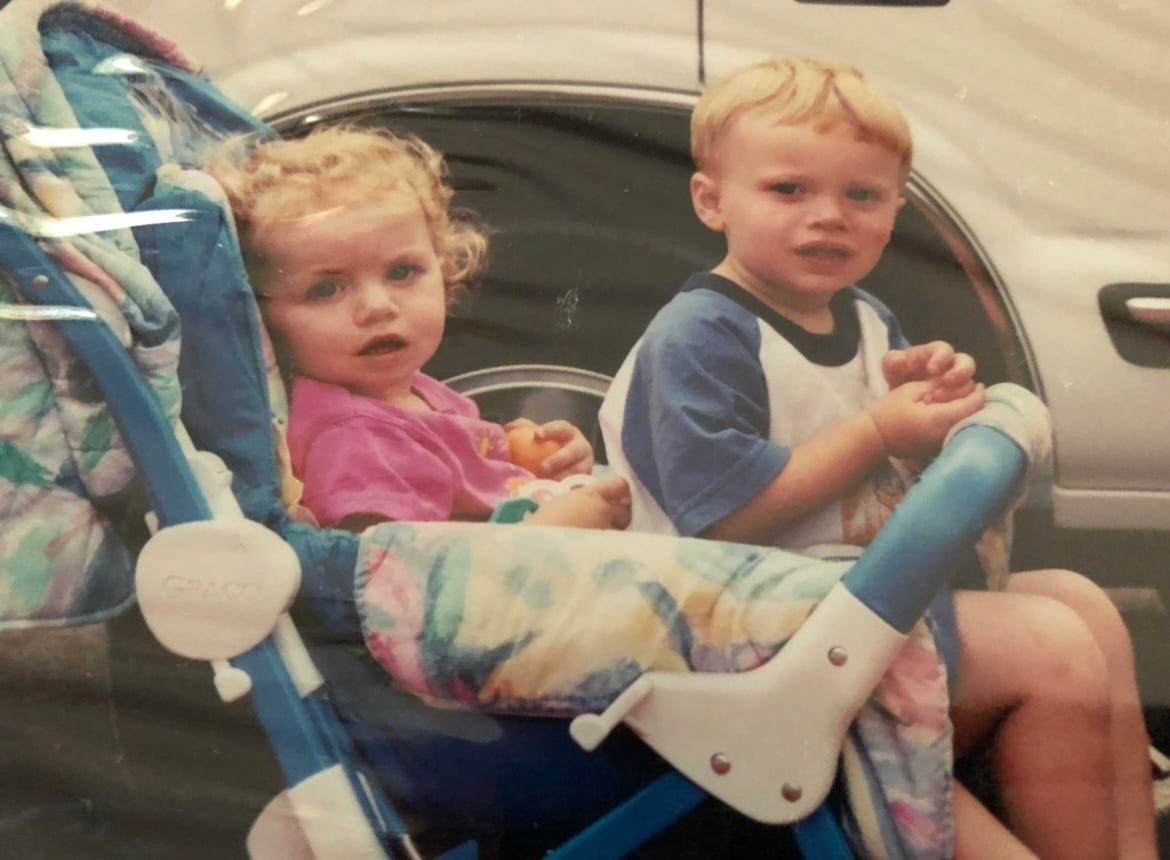
Nana, pushing us around the yard two-to-a-ride in the blue watercolor stroller. Nana, holding me in the dining room when my mother’s resentment carved something vital from me. Nana, drizzling powdered sugar icing on cookies and lemon bread. Here. Something for the road.
The last time I was at Nana’s, I took the opportunity to gorge myself on the familiarity of it all.
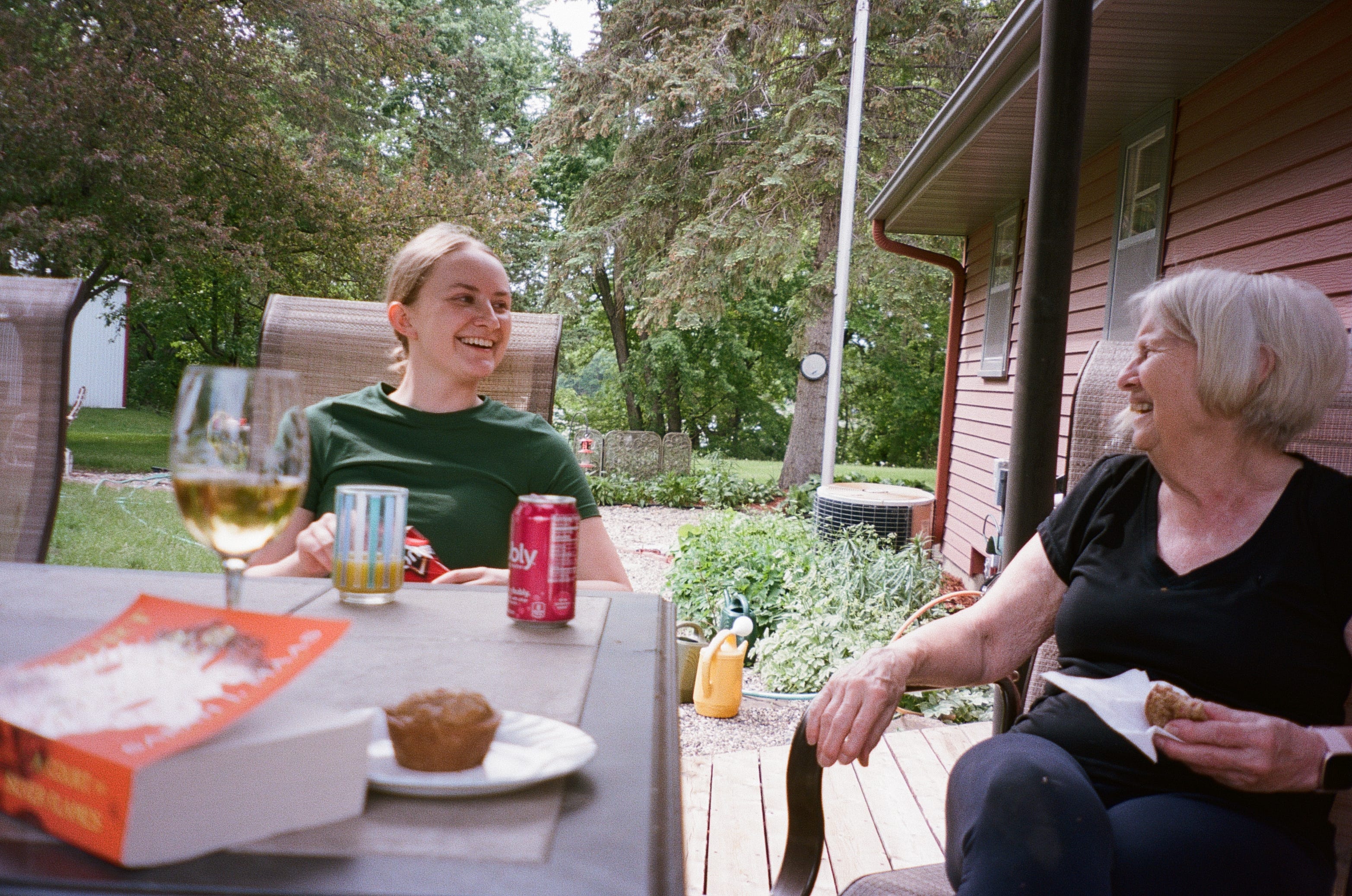
I wandered the yard that she has continued to maintain against the will of her relatives for many years now. I sat on the deck. I scraped Nana’s almond milk body butter from the tin and slathered it on my calves to smell like her. I chopped rhubarb on the same counter I sat on as a baby. It’s simultaneously disorienting and orienting to be able to place yourself in space and time like that.
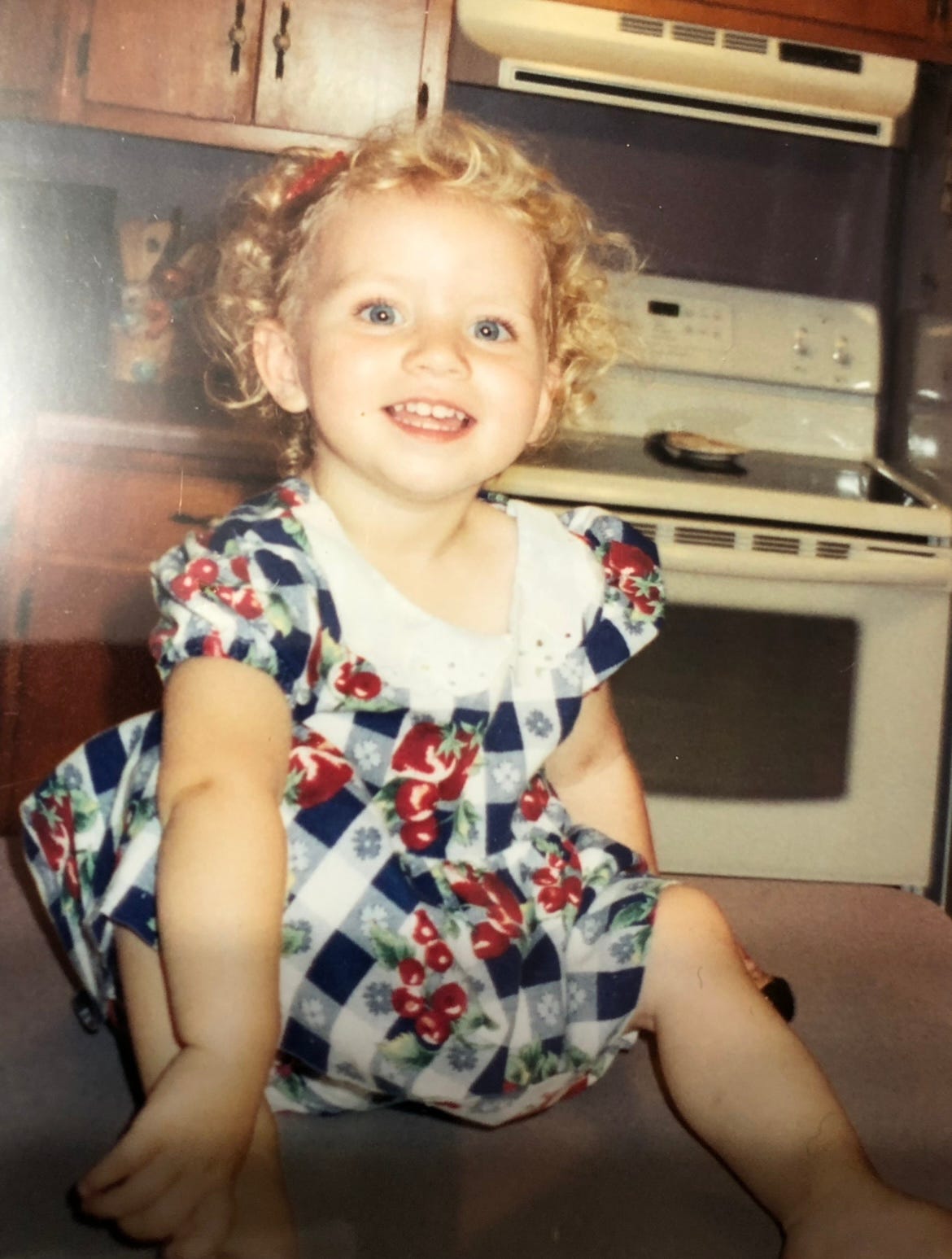
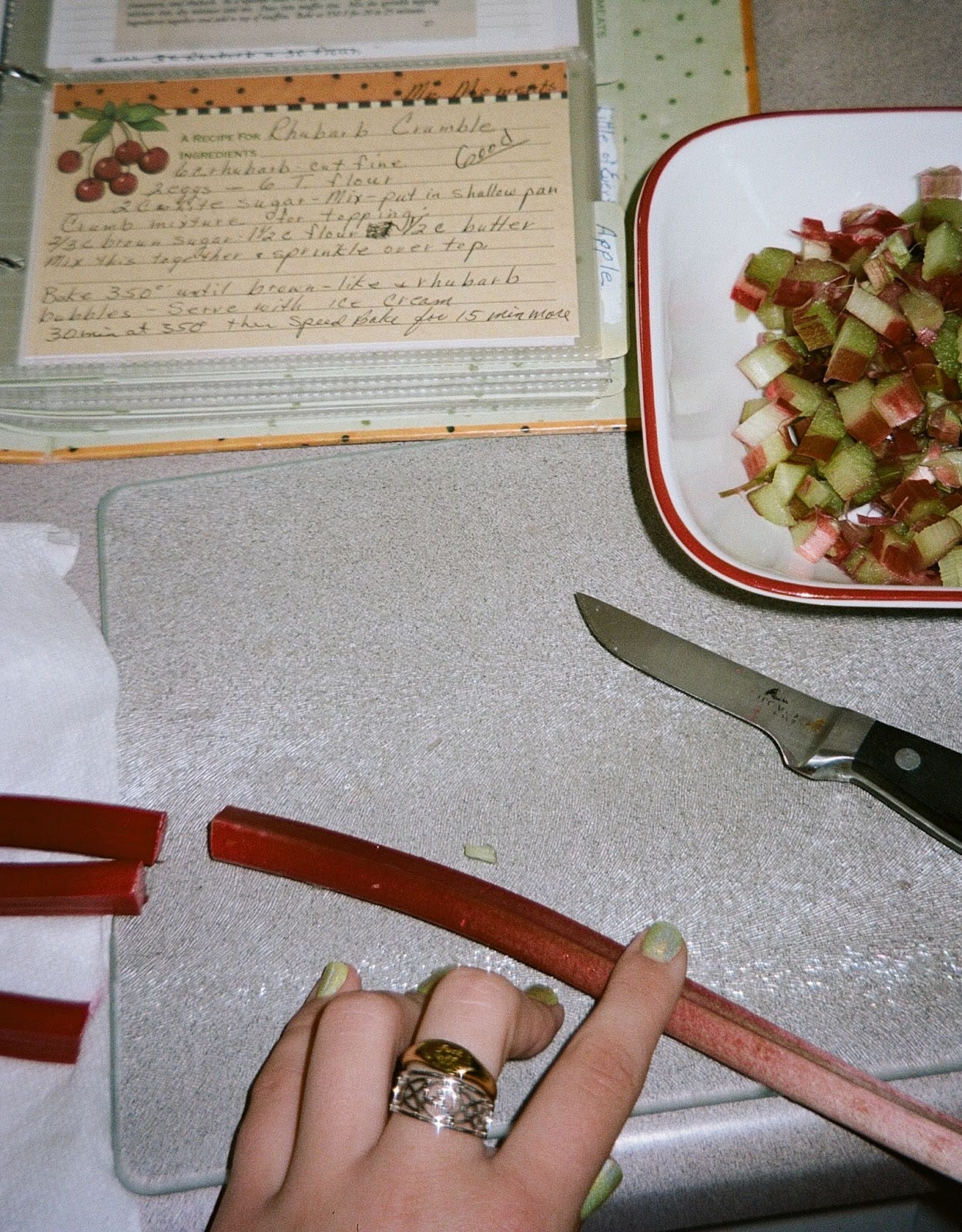
I talked to Nana. About the goings on in town, about how her osteoporosis is rearing its ugly head, about how much I love her. She gave me a quilt made by her mother, my namesake. I walked outside into the yard where we played ball, and suddenly, I saw it all. Everything laid out before me at once: this supercut of everything that happened in that place to make me me. And I wept.
I haven’t stepped foot in my childhood home in years by choice and never will again, and I don’t feel sentimental about it. But Nana sold her house. A place we spent the days of our youth will soon be repurposed. We aren’t kids anymore. Which I suppose is what I’m actually mourning, isn’t it.
In the bustle of Nana’s move, my sister salvaged a photo collage that hung on Nana’s wall for as long as I can remember. It now hangs in her apartment in Minneapolis.
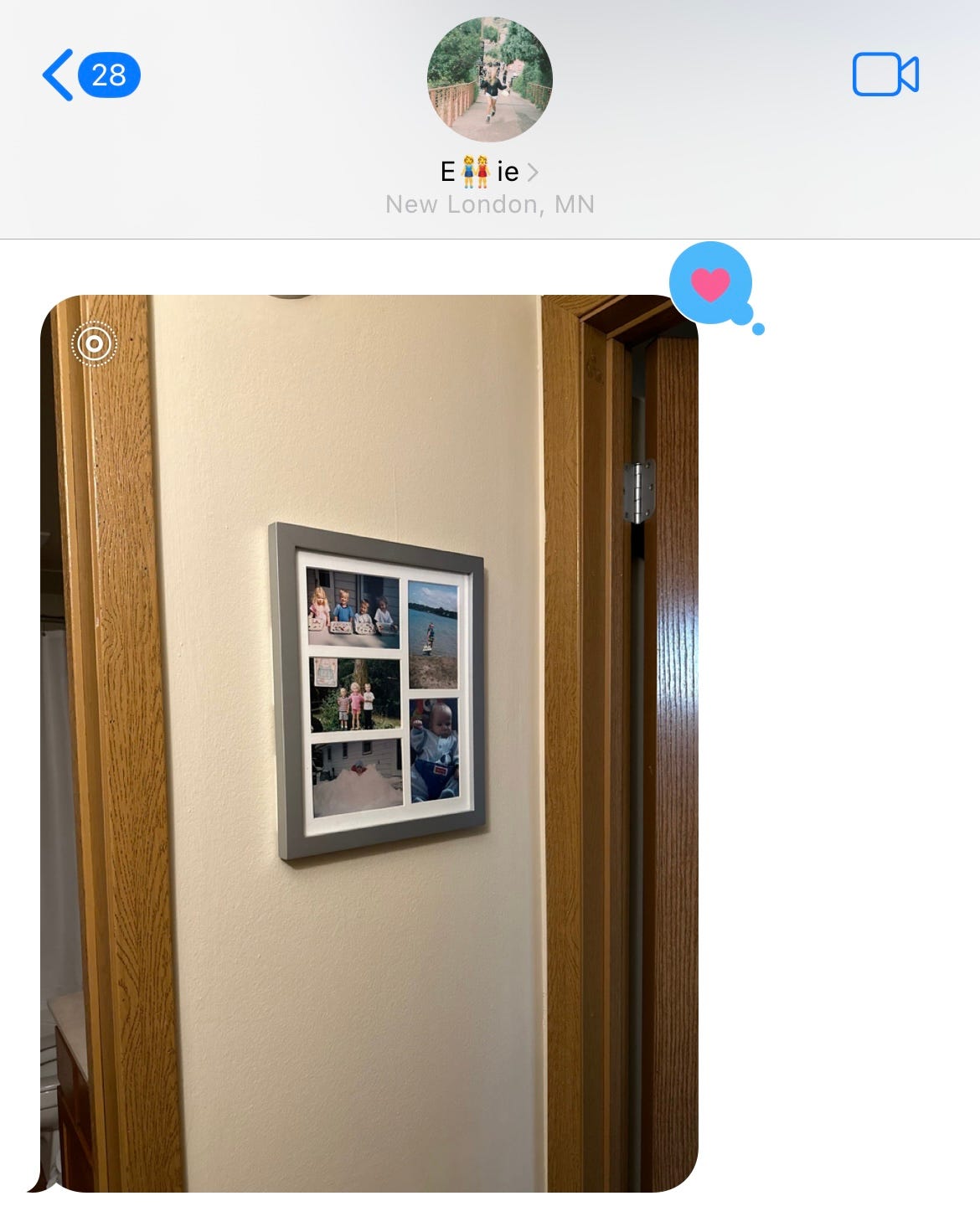
The weekend after next, our newer cousins, Bres and Saoirse, are staying at my sister’s place. They go to sleepovers at her house (apartment) now. Saoirse cries every time I leave Minnesota. We play a role in their lives–the older, adult cousins– that never existed for us. They will never know Nana’s sleepovers in the same way we did, but a space is occupied for them that was void for us. They have other people to be safe with, other places to be young in.
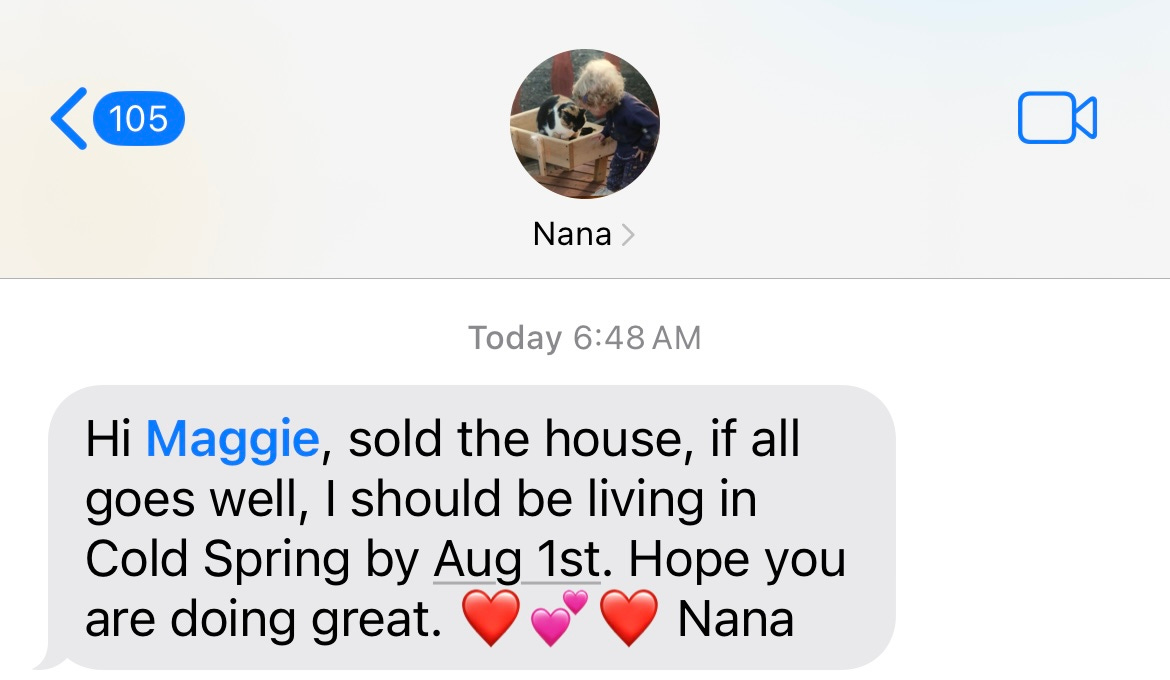
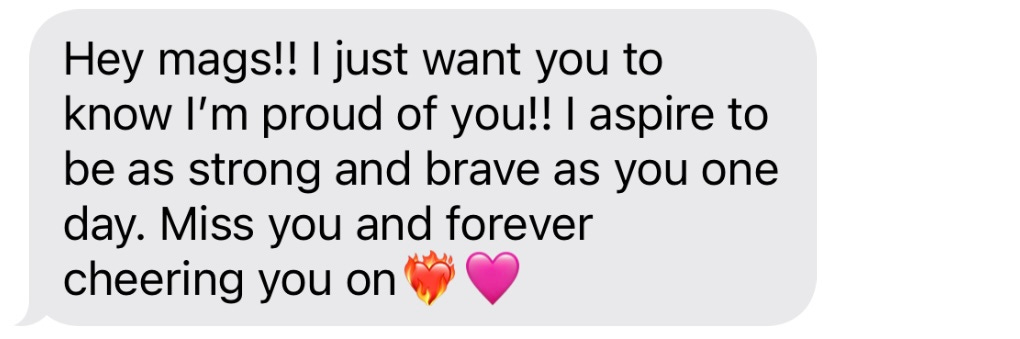
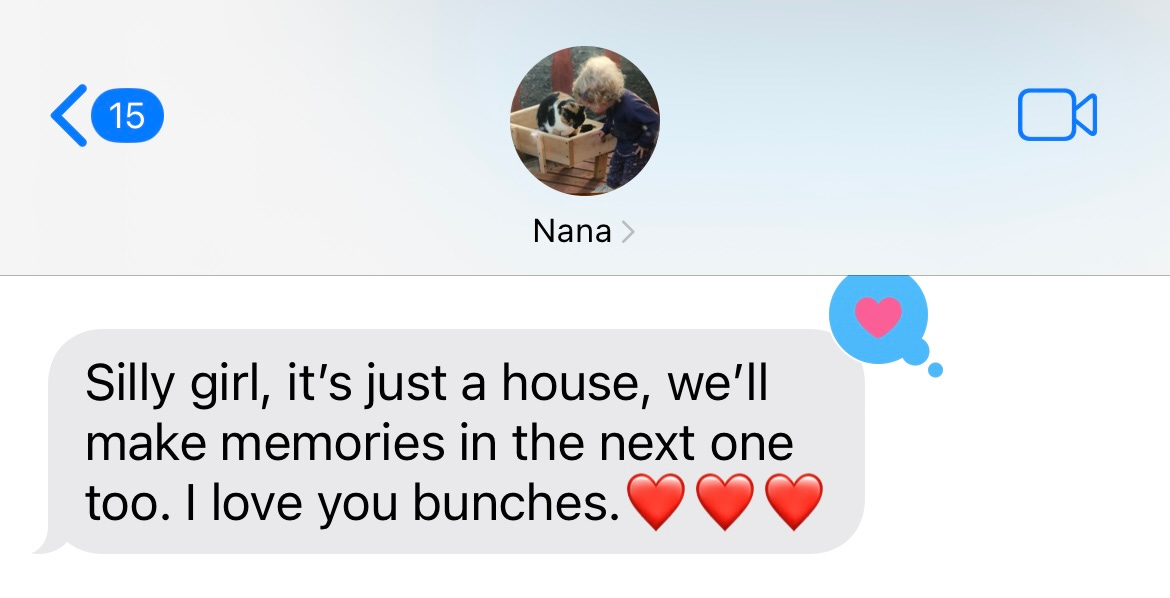
The original six of us have stuck to our rules. We’re doing our best to follow through. I’ve watched my cousins grow into their own, grow into these wonderful people. I’ve watched my eldest cousin look after my brother like a sibling. Or maybe a son. We all play wall ball with Bres and Saoirse at their house. Which isn’t baseball, but we’re making new traditions. Kylie sends me this text, and I cry. I’m always crying about things that are beautiful these days.
I think about Nana’s, and I think about how it was just the container in which I got to love my cousins. And be loved.
I think about how we are grown up now. No longer reliant on moms or dads to drive us to Nana’s for our rare, allotted time there. We don’t have to beg for scraps of each other anymore, appealing to our standoffish parents for just ten more minutes at Nana’s house. Somewhere along the way, we gained access to drivers licenses and free will and plane tickets. I think: we don’t need this place like we did back then. We should give it to someone else.
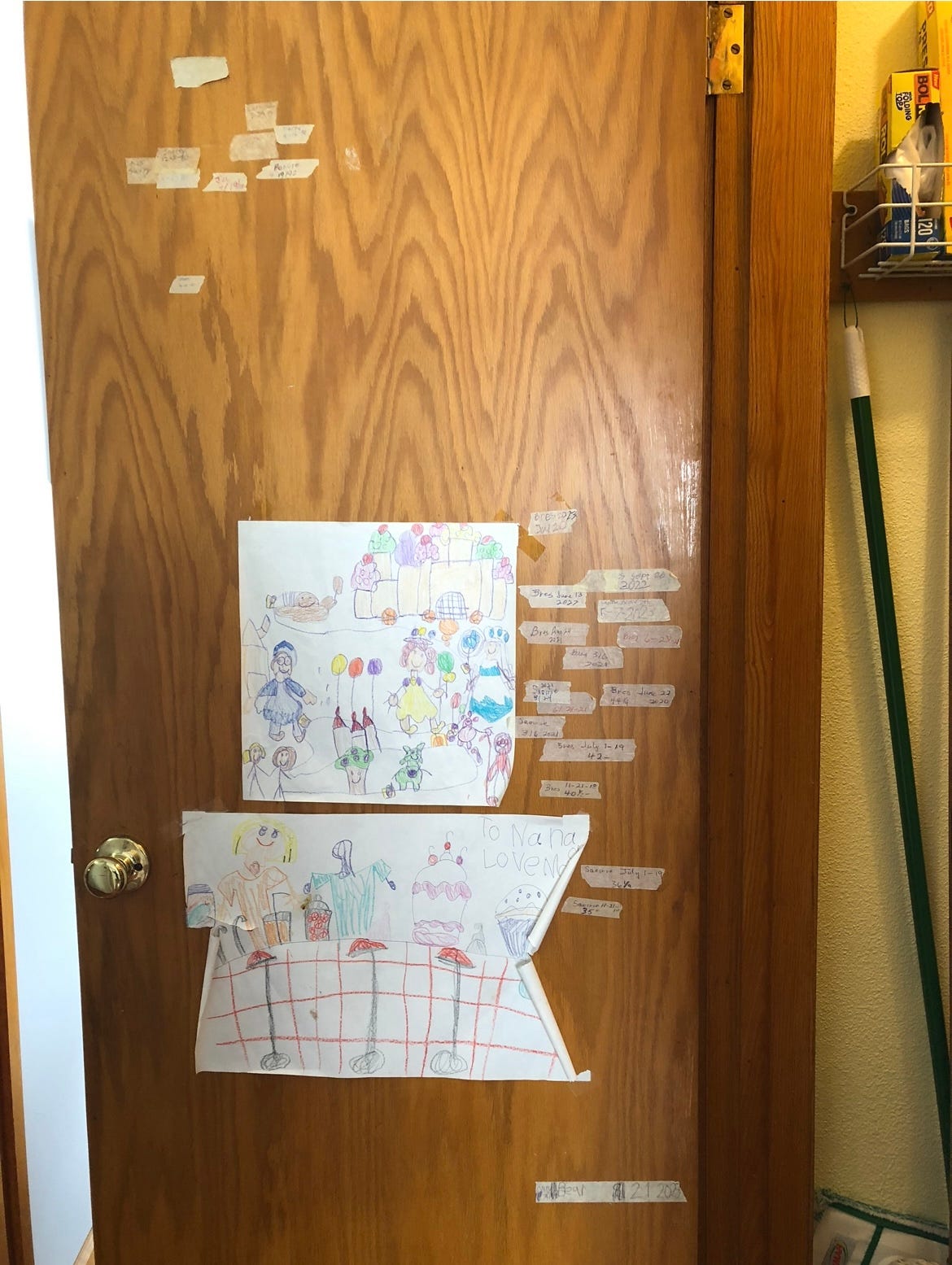
There is evidence of us everywhere in that house. Whoever comes next will know we happened there. That it was so 𝐺̲𝑜̲𝑜̲𝑑̲. Someone will stock their new pantry for the first time and see a twenty-year span of my cousins’ heights marked on the inside of the door. Is there anything so tender as that?
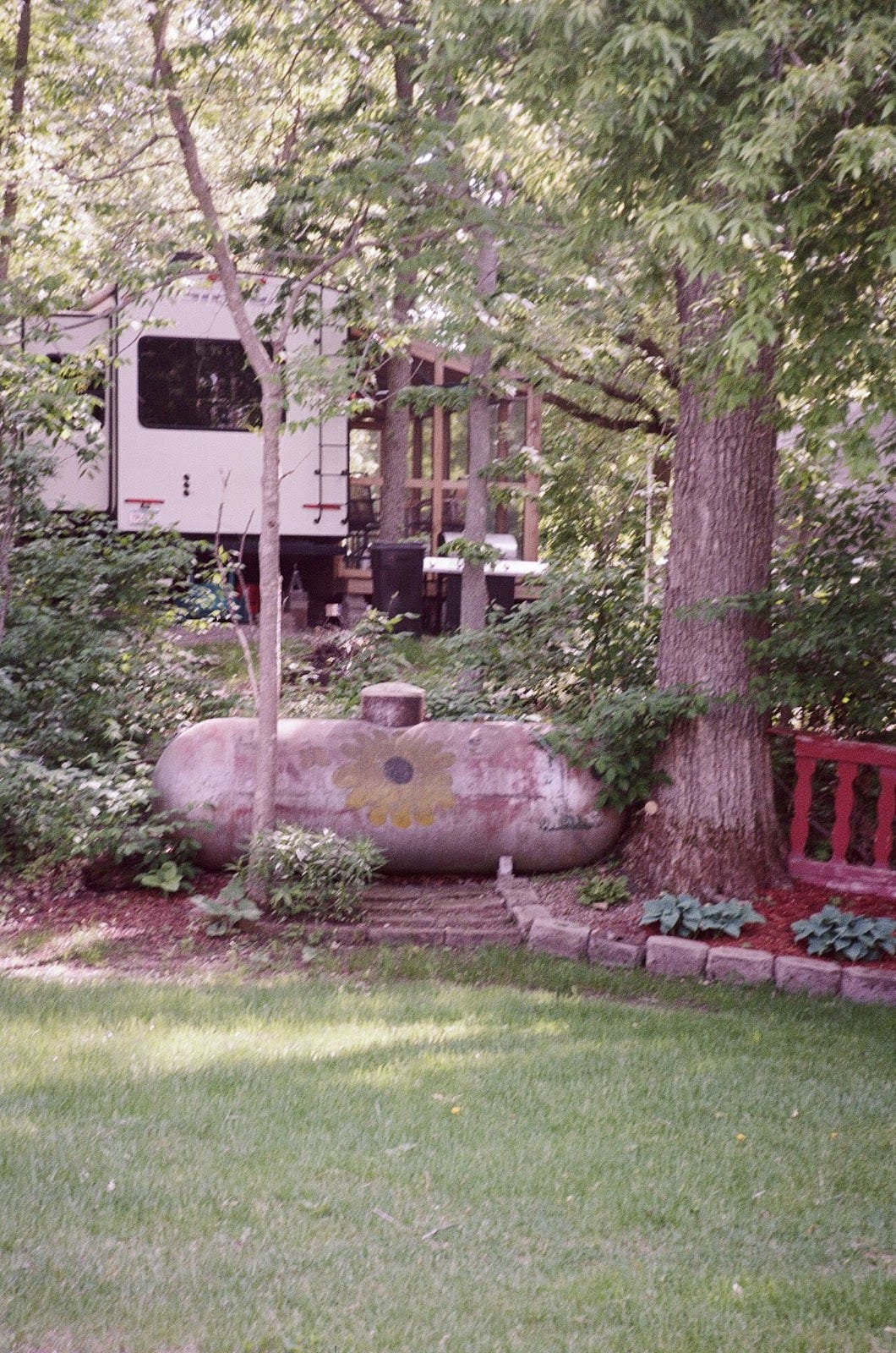
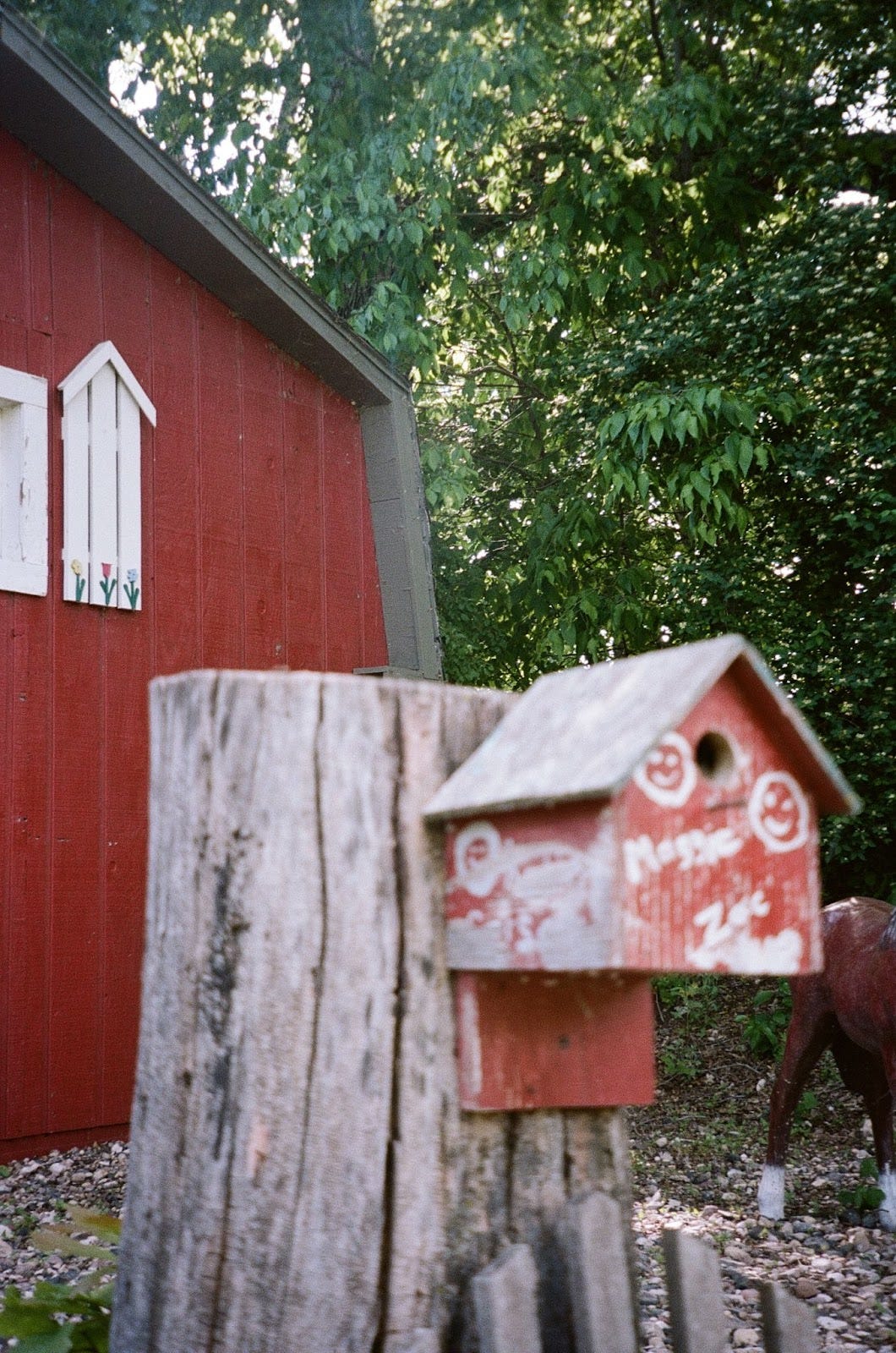
Anyways, I need to go. I have a plane ticket to book. My little cousins are aging in gargantuan leaps. I want Saoirse laying on my chest while we watch Lyle, Lyle, Crocodile. I want to see Nana’s new house.
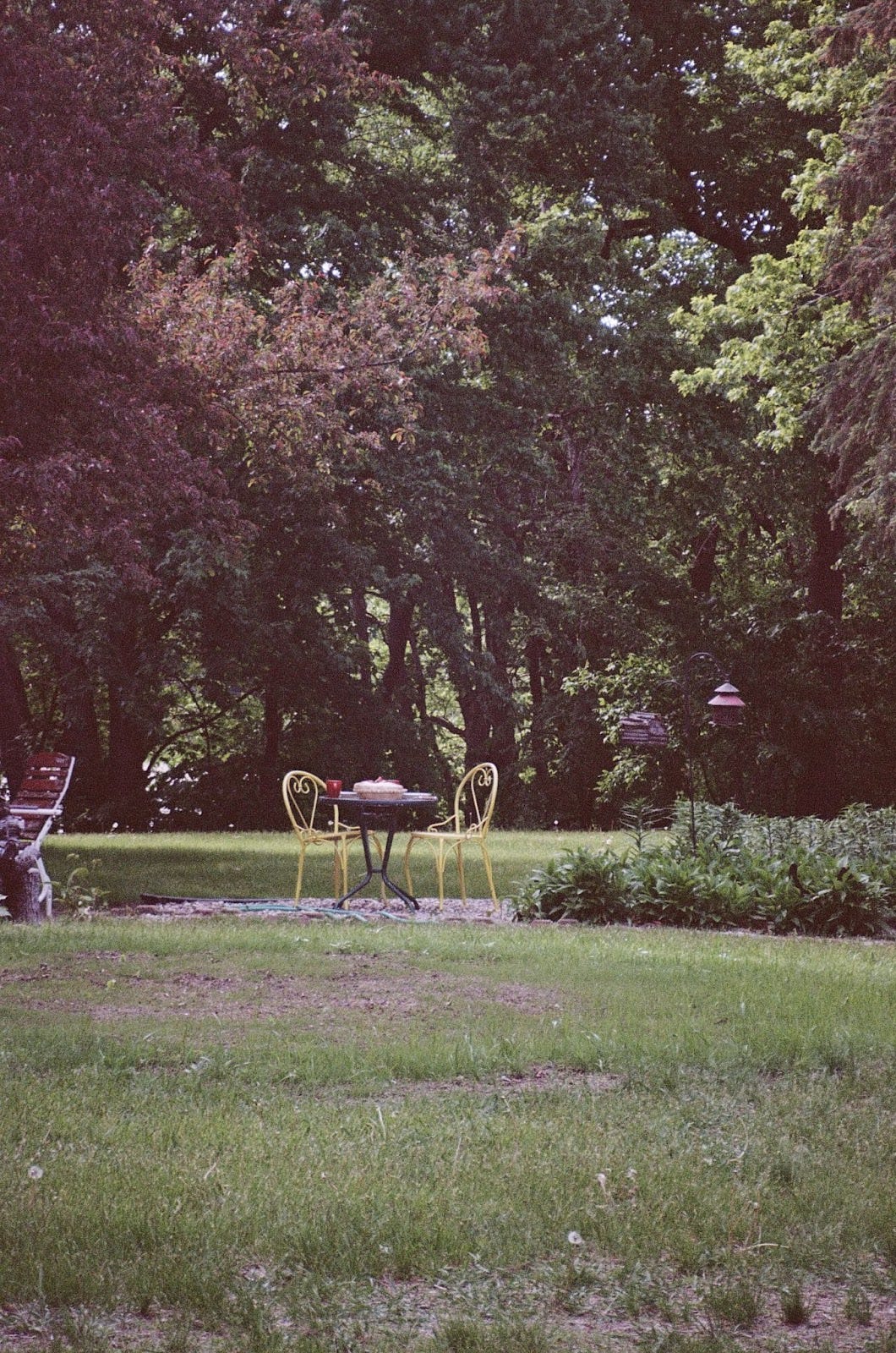
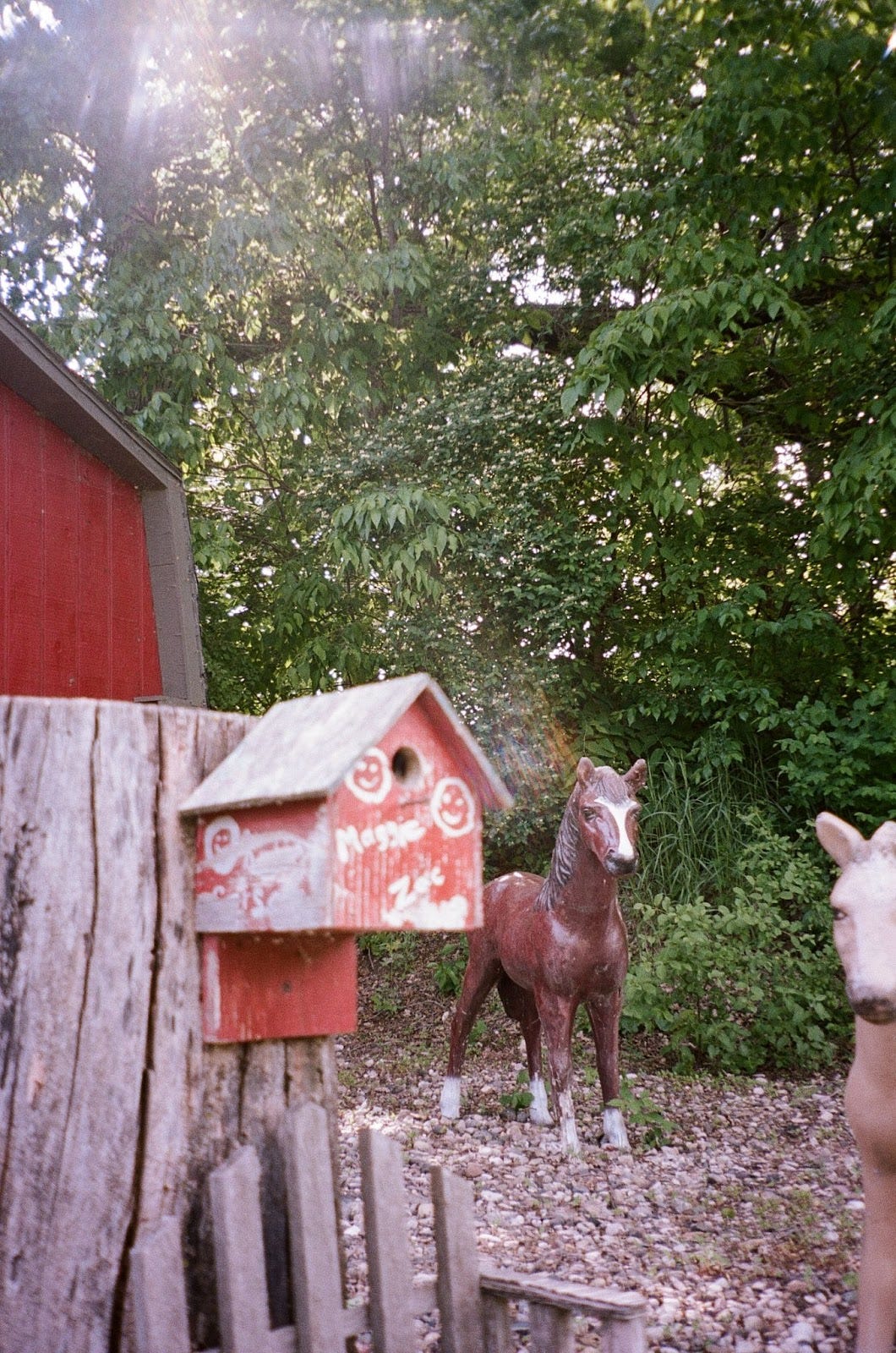
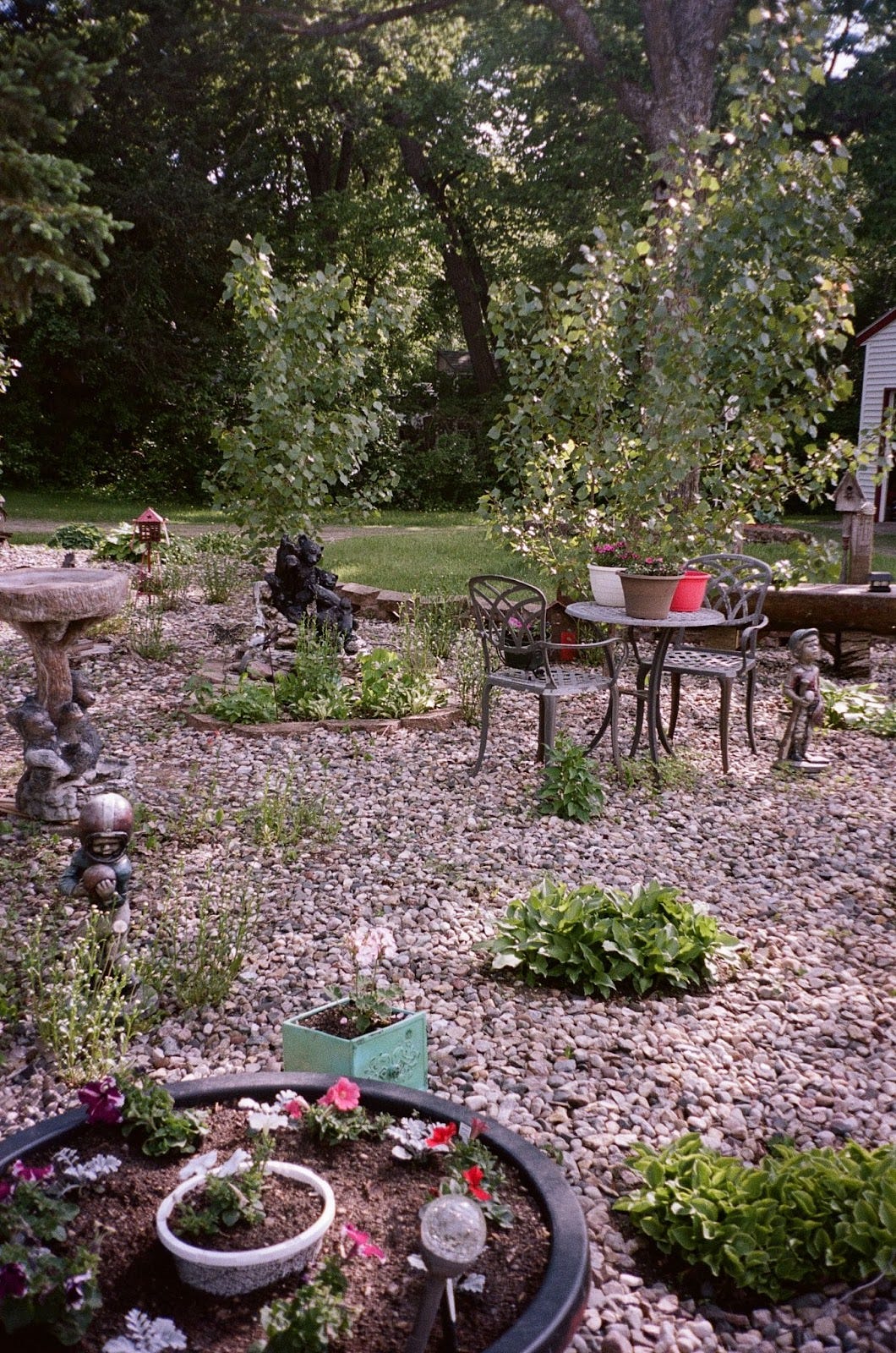
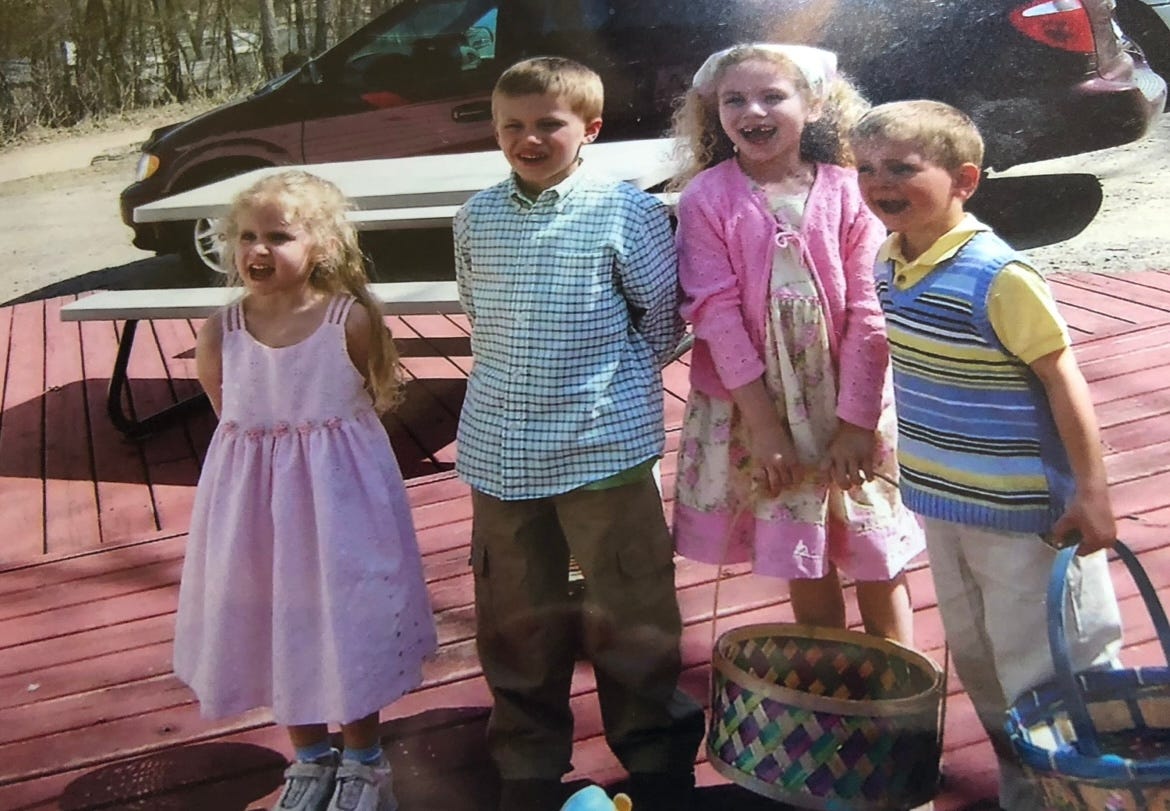
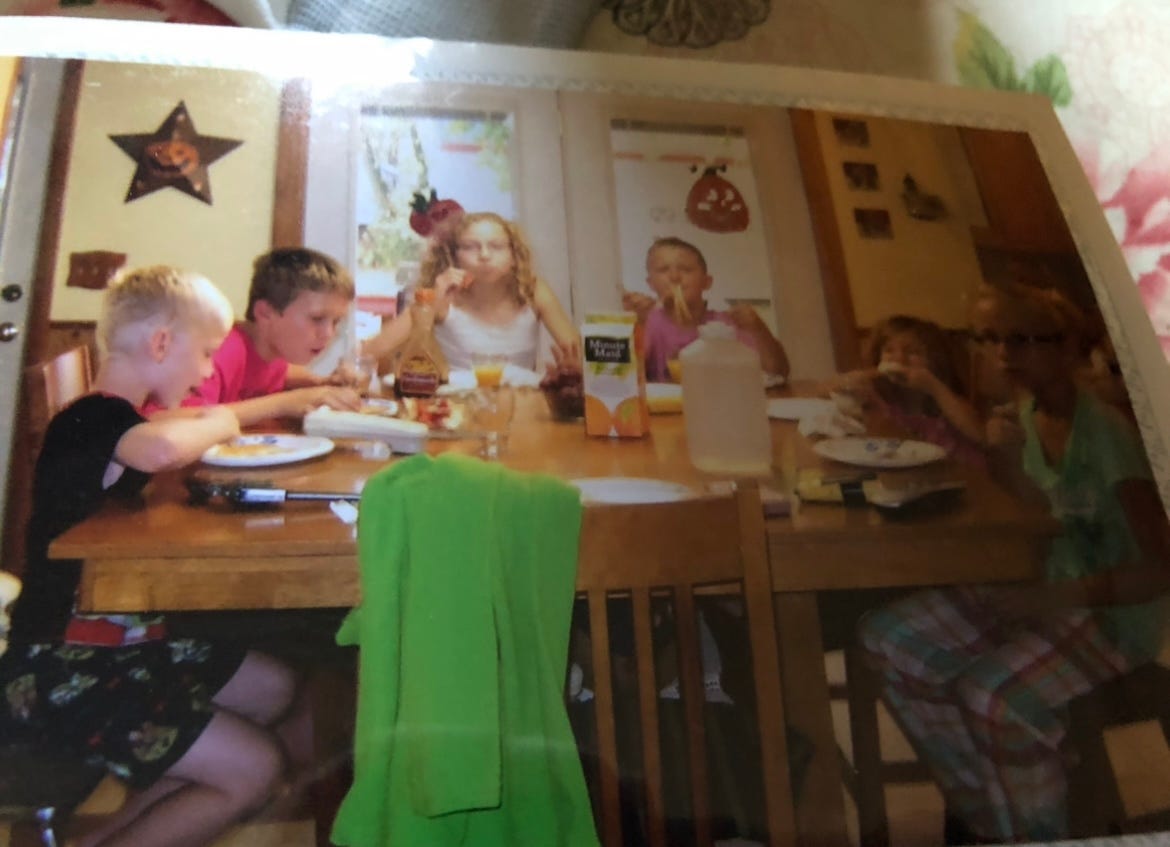
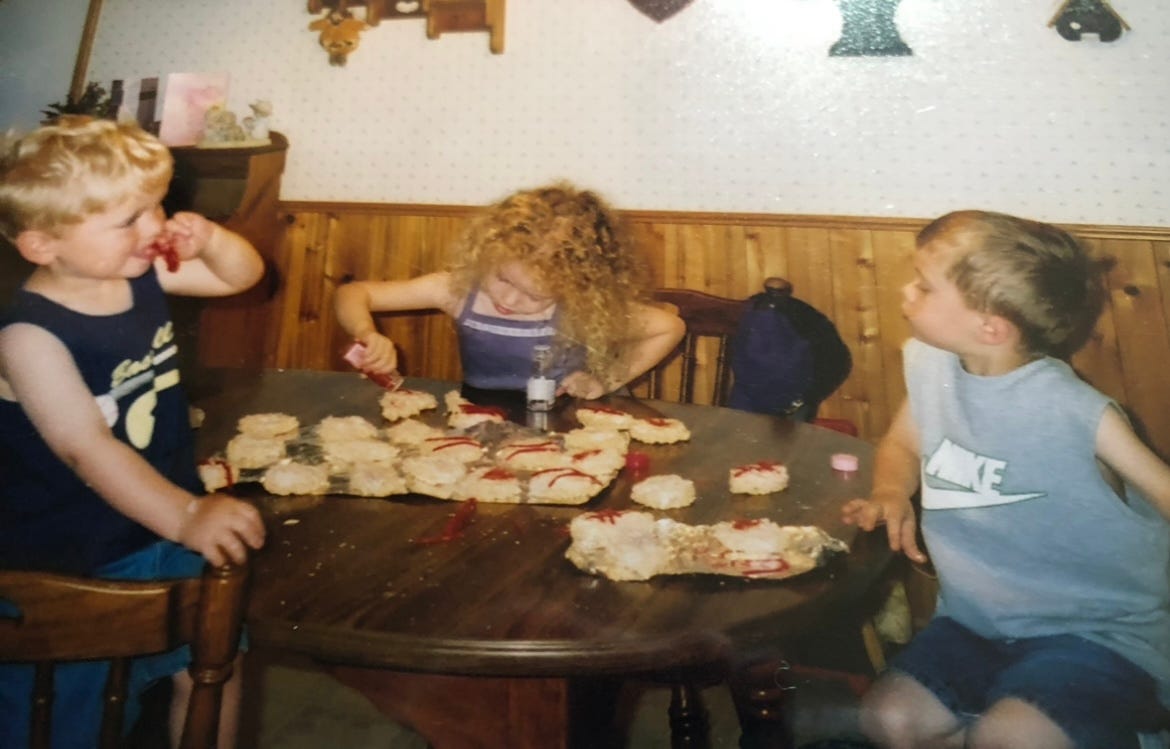
(photos of scrapbook photos courtesy of Nana)